

The RECLAIM project has developed a low-cost, portable, AI-powered robotic material plant that is designed to help with waste management in remote areas or locations where large-scale infrastructure is unjustifiable. The solution will be deployed initially in the Greek Islands.
AIMPLAS
Reclaim box in action
Using multiple robots with various pickers, the RECLAIM solution works by collecting and handling different types of waste depending on their composition. With the addition of AI-powered computer vision, waste can be accurately identified, maximising sorting effectiveness. Added portability ensures the solution can be deployed anywhere, allowing for material recovery close to the source and the promotion of recycling and a circular economy for plastics.
AIMPLAS, the Plastics Technology Centre, ensures the plant’s equipment’s operational requirements are defined ahead of the launch. This entails the evaluation of technological options in the market, ensuring the most suitable components are selected. Additionally, the company evaluates available technological options in the market (selecting the most suitable components), monitoring key performance indicators (KPIs), and presenting solutions and adjustments that help achieve objectives.
“Remote islands, hard-to-reach rural areas, or regions with limited infrastructure are just some scenarios where this equipment can make a significant difference,” said Javier Grau, A Researcher in Mechanical Recycling at AIMPLAS. “Additionally, the equipment also serves as an ideal solution for large-scale events such as festivals, concerts, or sports competitions, where massive waste generation in one place requires immediate treatment. It can also complement existing recycling plants in tourist areas that face significant population fluctuations during peak seasons.”
AIMPLAS
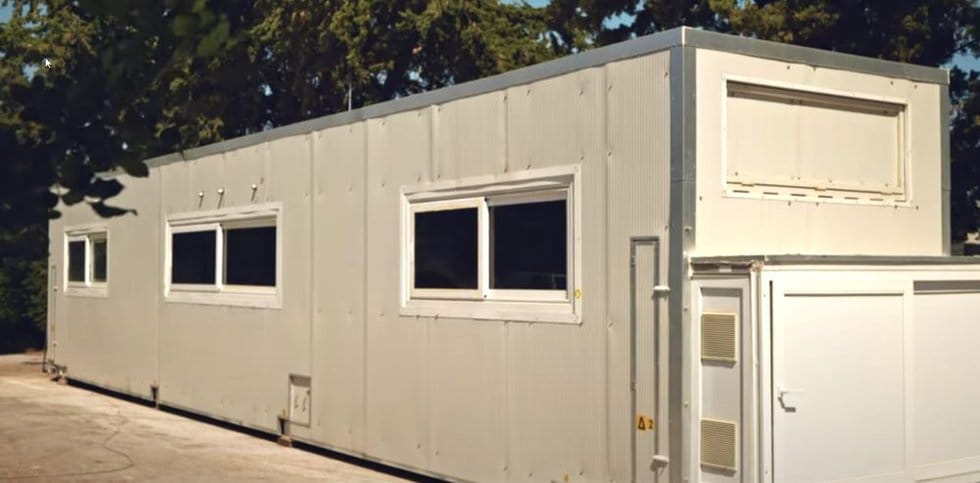
Reclaim box.
Future application expansion
With its compact design that’s easily transportable in a container, the solution can be quickly deployed almost anywhere.
Grau added, “As recycling needs evolve, this portable equipment promises to unlock new possibilities. For example, it could facilitate marine waste management in port areas, improving material sorting and separation while reducing environmental impact. Another relevant application is its potential to assist existing sorting plants in processing bioplastics, whose presence is increasing. These materials pose a challenge to current recycling streams, but their recovery could have a significant impact in the future.”
Funded by the EU's Horizon 2020 program, the project consortium is led by FORTH (Foundation for Research and Technology) – Hellas (Greece) and includes:
- AIMPLAS.
- Axia Innovation (Germany).
- ION (Greece).
- IRIS (Spain).
- HRRC – Hellenic Recovery and Recycling Corporation (Greece).
- KU Leuven (Belgium).
- Robenso – Environmental Robotic Solutions (Greece).
- ISWA – International Solid Waste Association (Netherlands).
- UoM – University of Malta (Malta).


