

Investing in real-time monitoring technology is no longer a nice-to-have, but a must in modern manufacturing. BP&R sat down with the Intouch Monitoring team to discuss the importance of monitoring production, its implementation challenges and the benefits it brings.
[BP&R] What are the biggest challenges plastics manufacturers currently face when it comes to monitoring production quality and process performance?
[Intouch] There are three key challenges: budget, ageing equipment and people. Manufacturers need to know that any investment in technology can easily deliver a clear return. There’s also a perception that production monitoring requires new machinery, but it doesn’t. At Intouch, we can connect machines of virtually any age, giving manufacturers reliable, real-time production data without replacing existing equipment.
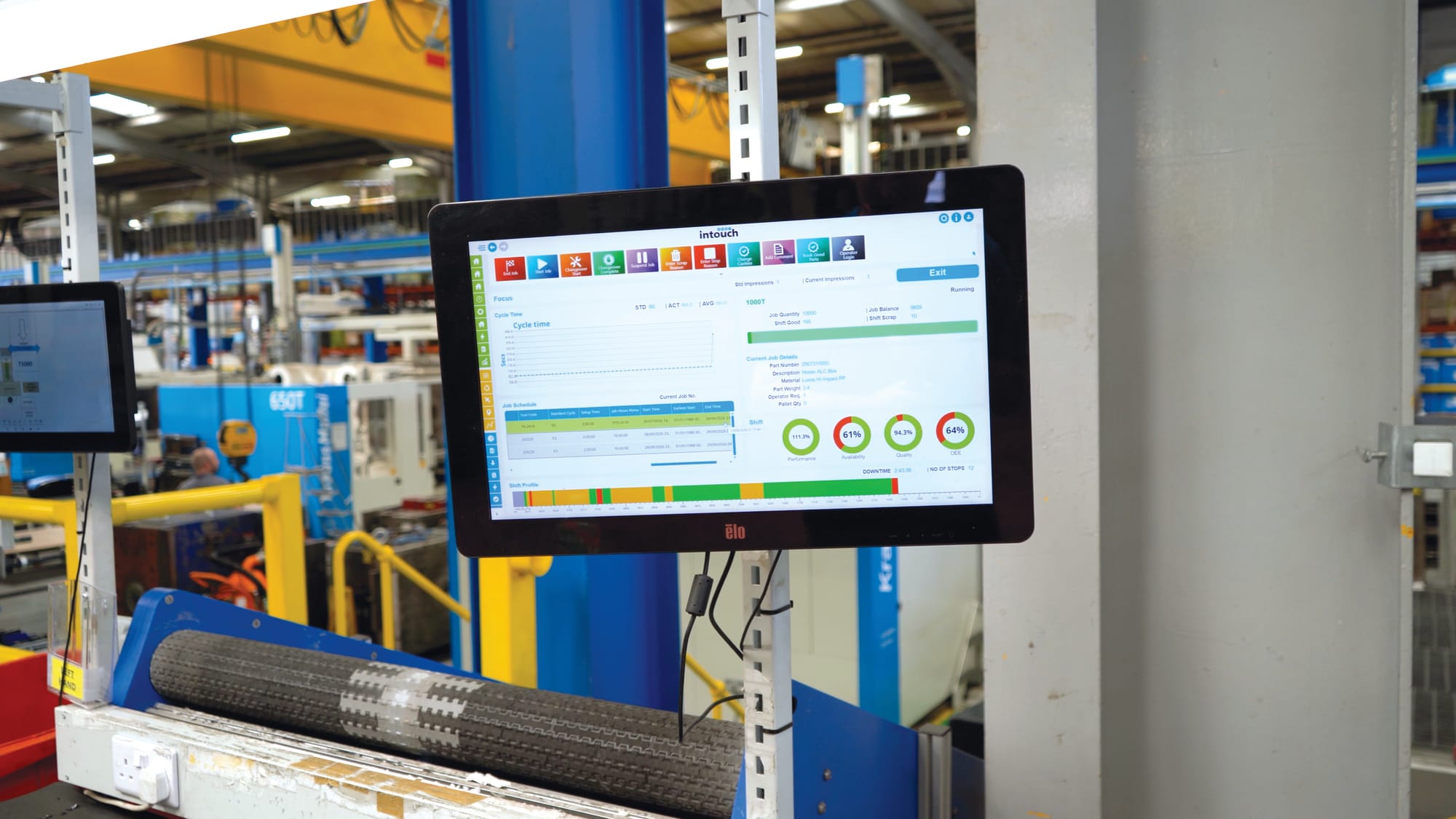
The other consideration is people. Introducing any new technology means changing the way teams work, and initially there can be some uncertainty around production monitoring. We’ve been into factories where operators have said, “You’re installing a Big Brother system that’s going to watch us.” But once teams start using Intouch, that perception often changes very quickly. Operators can see how they’re performing against target, get clear information when something goes wrong and spend less time manually recording or searching for production information. It gives them the information they need to react faster, solve problems and keep production moving. Ultimately, it makes their day-to-day jobs easier and gives them more control over what’s happening on the shop floor.
Manufacturing is changing rapidly. If something works, it’s easy to leave it alone, but if you never change anything, how do you improve? With manufacturers under increasing pressure to control costs and margins, there’s a natural reluctance to introduce something new. The reality is that there’s never a perfect time to start. At some point, you simply have to take that first step.
The good news is that modern production monitoring systems don’t require lengthy implementation projects. These days, systems such as Intouch can be implemented and delivering real-time production visibility within a matter of weeks.
[BP&R] How is production monitoring helping manufacturers move from collecting data to using it to make better decisions?
[Intouch] Data is incredibly valuable, but having too much data can be almost as challenging as having too little. The key is identifying meaningful information and presenting it in a way people can understand and act on. Someone needs to own that data and look at it with the question: “How can we use this to improve?”
One thing we demonstrate is how small losses can add up to something significant. Five minutes of downtime here and there might not seem important, but when you add them together over a week, a month or a year, they have a real impact on machine availability. The key is being able to see those small pieces of information as part of a much bigger picture. Once manufacturers can digest the data, they can make small, targeted improvements and then measure whether those improvements worked. That’s where production monitoring becomes much more than data collection; it becomes a tool for continuous improvement.
[BP&R] Can you give an example of a customer problem that monitoring technology has helped solve?
[Intouch] A good example is Birmingham-based Shapers Group. Before Intouch was installed, they had agreed to complete several orders, but inefficiencies within the factory meant they weren’t always completing those jobs on time. That resulted in significant overtime costs at weekends. Overtime doesn’t just mean paying employees more, but also paying to keep the lights on and the machines running.
After implementing Intouch, they reduced their monthly overtime costs from around £24,000 to £2,000. That’s a very tangible example of how having visibility of production performance can directly affect the bottom line. We’ve seen similar benefits in other areas, including efficiency, overall equipment effectiveness and special transport costs associated with late deliveries.
[BP&R] What trends are you seeing in the adoption of real-time monitoring across the plastics sector?
[Intouch] There’s definitely a positive trend towards adoption. A few years ago, conversations were often about what the technology was and why manufacturers might need it. Increasingly, the conversation is now about how manufacturers can overcome the barriers to implementing it in their plants.
Another important change is affordability. Historically, production monitoring systems could involve a significant upfront investment, which meant they weren’t necessarily viable for smaller manufacturers with only a handful of machines. Cloud-based subscription models have changed that. The technology is now much more adaptable and accessible, allowing manufacturers to connect their equipment without the same level of upfront investment.
[BP&R] How important is data integration for manufacturers, particularly when they have machinery and equipment from multiple generations or different suppliers?
[Intouch] It’s extremely important. We don’t think manufacturers should necessarily be looking for one system that does everything. Integration is often a much better approach. For example, Intouch can connect with a customer’s ERP system through an API. We can take work orders from the ERP system, bring them into Intouch and then calculate how efficiently those orders are being produced. That information can then be passed back into the ERP system or into another business intelligence platform.
We’ve monitored everything from robots through to highly complex manufacturing processes. In one example, we worked with a concrete tile factory where the manufacturing process involved mixing wet cement, pressing it into tiles, curing it for several hours and then palletising the finished products. It might sound difficult to monitor, but relatively simple wire-break sensors could detect each tile as it moved along a conveyor. The system could then compare the number produced with the number counted at the end of the process, helping identify potential quality losses.
[BP&R] Looking ahead, what will a data-driven plastics factory look like, and what should manufacturers be doing now to prepare for it?
[Intouch] The first step is establishing a solid data foundation. We still walk into factories where production orders are being written on whiteboards. There’s nothing wrong with a whiteboard, but it isn’t the most efficient way to capture and use production information. Going from a whiteboard straight to AI is a huge jump. Manufacturers need to digitise their processes and start collecting reliable data first. Once that foundation is in place, they can start looking at what AI can do with it.
The future isn’t simply about collecting more information. It’s about turning reliable production data into insight, using that insight to make better decisions and continuously improving the way a factory operates.


