

Rory Chandler, Business Development Manager at ALBIS UK, explains what processors should consider when comparing materials, moving away from a cost-only approach to maximise productivity.
Purchasing decisions in the plastics industry have long been dominated by one number: the price per kilogram. Yet the economics of plastics processing have changed significantly in recent years. Increases in energy prices and labour costs continue to shift the profitability balance, and processors increasingly recognise that machine utilisation, energy consumption, overall equipment effectiveness, and labour efficiency strongly influence bottom-line performance.
From material price to cost per part
Material selection has traditionally focused on performance, regulatory compliance and price per kilogram, with the lowest-cost option often selected once these requirements are met. However, this approach overlooks the other costs associated with converting a material into a finished component. What matters is the total cost of producing the finished part.
For example, a material that costs slightly more per kilogram but enables shorter cycle times can significantly reduce manufacturing costs. Faster cycles mean more output from existing equipment, lower cost per part and, where demand exists, the ability to generate additional revenue without investing in new machinery. In many cases, the financial impact of productivity improvements can far exceed that of material-price reductions.
High-productivity materials in practice
BASF’s High Productivity Plus portfolio – Ultramid HPP and Ultradur HPP – is an example of this approach. These polyamides and PBT-based materials are engineered to offer improved flowability, faster crystallisation and the ability to process at lower melt temperatures compared with conventional grades. BASF’s published work with TE Connectivity, a leading manufacturer of connectors and sensor solutions, reported cycle-time reductions of up to 36%, throughput increases of 30%, and energy reductions of 15-22%, while maintaining component quality. These figures illustrate the scale of the potential gains.
Recent ALBIS customer trials have demonstrated that, in the right application, the potential gains can be substantially higher. In ALBIS trials, Ultramid B3EG6 HPP delivered cycle-time reductions of more than 50% compared with a standard PA6-GF30, while maintaining critical dimensions and mechanical performance. While results vary by application, they demonstrate the significant impact material selection can have on productivity.
Capacity without capital investment
One overlooked benefit of cycle-time reduction is the release of machine capacity. Many moulders face the challenge of increasing output without investing in additional machinery, tooling or factory space. Reducing cycle time offers an alternative route: a machine producing parts 20% or 30% faster effectively creates additional manufacturing capacity from existing assets. This can defer or even eliminate the need for investment in additional equipment.
A procurement decision that reduces spend may be considered a success, yet if that same decision leads to higher production costs elsewhere in the process, the overall impact on profitability may be less positive than first assumed. The relevant measure is therefore not the saving on the material alone, but its effect on the economics of the complete production process.
The hidden cost of material variability
The same total-cost logic applies beyond cycle time: material consistency, scrap rates and process stability can have just as much influence on the economics of a component. In sectors such as furniture, emphasis on sustainable business practices is accelerating the adoption of recycled materials. For brand owners and plastics converters, the broad choice of sustainable thermoplastic technologies and associated price points creates a new challenge. It is relatively easy to compare recycled materials based on recycled content, environmental data or price per kilogram. It is far more difficult to assess how consistently those materials will perform in a production environment.
ALBIS’ work with office furniture manufacturer Orangebox illustrates the challenge. Several recycled PA6 materials were evaluated. While some lower-cost materials appeared attractive from a purchasing perspective, significant variability in material quality led to processing difficulties and elevated scrap rates. In certain applications, scrap levels increased from approximately 3% to as high as 15%, resulting in additional material waste, machine time, energy consumption, quality inspection effort and rework.
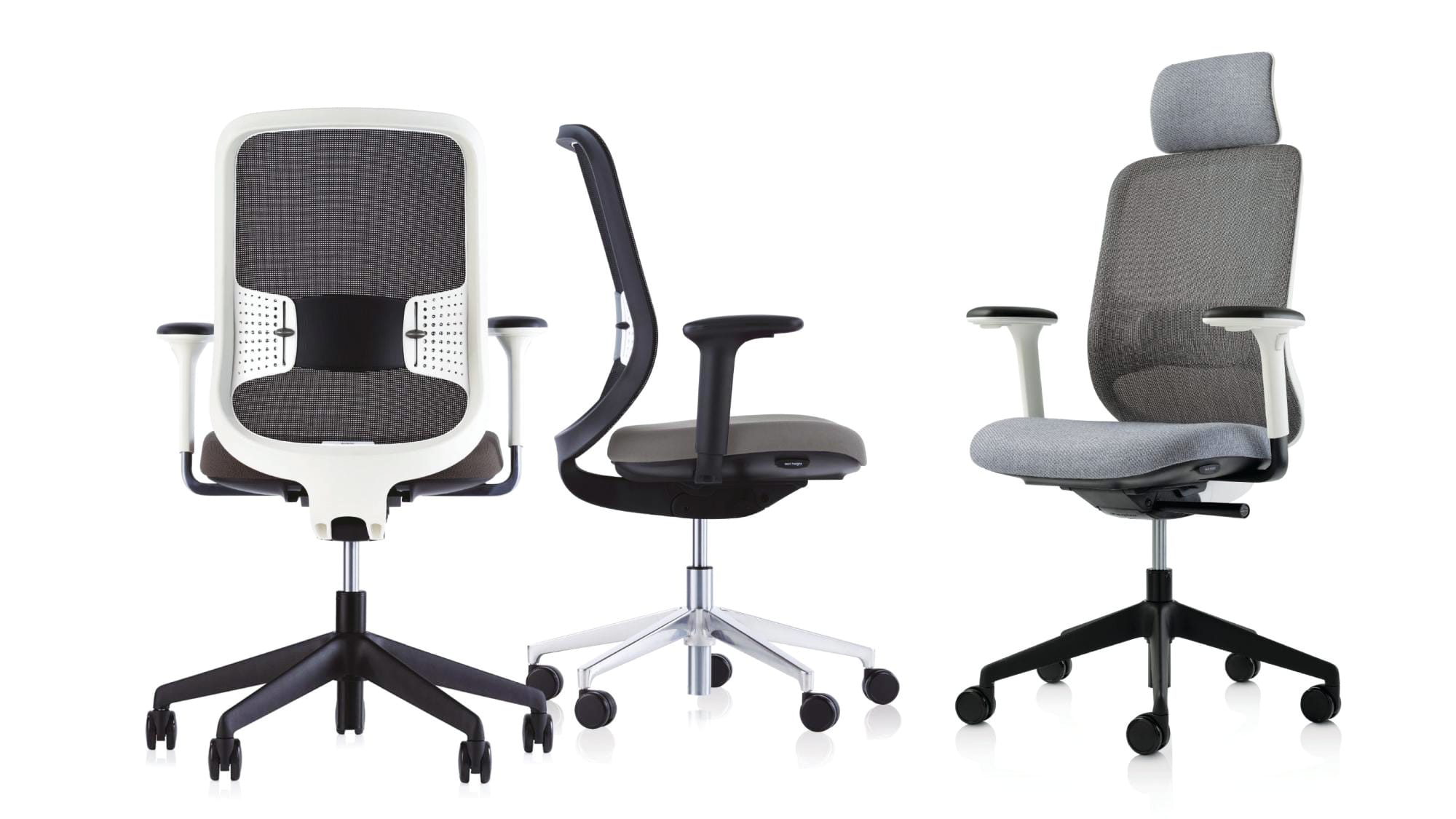
The apparent saving achieved through material purchasing was quickly eroded by the hidden costs of variable material quality. Working with Orangebox and their manufacturing partners, ALBIS Area Sales Manager April Stacey helped evaluate and implement grades from MOCOM’s ALTECH ECO portfolio. The improved consistency and process stability significantly reduced scrap rates while maintaining the desired recycled content. The result was lower manufacturing costs and greater confidence in part quality. ALTECH ECO is positioned as a “Near-to-Prime” solution, combining recycled content with the consistency and quality required for demanding technical applications.
Productivity across the process
Technologies that reduce non-productive time can improve efficiency throughout the manufacturing process. In injection moulding and extrusion, purging compounds such as GranaClean can shorten material and colour changes, increase machine uptime and reduce material waste. Processing aids and specialist additives can also improve throughput, accelerate cooling or optimise crystallisation in materials such as polypropylene, polyethylene and PVC. Individually, these gains may appear modest, but over many production hours their cumulative impact can be significant and should be assessed in the specific process.
A practical total-cost view
The common theme is a move away from viewing materials purely as a cost and towards viewing them as tools for improving manufacturing performance. When comparing materials, processors should therefore model the full process: cycle time, processing temperature, scrap and rework, changeover time, energy consumption, quality consistency and available machine capacity. Instead of asking only, “What does this material cost per kilogram?”, the more useful questions are: “What is the cost per finished part? How much can productivity improve?”
In an industry where margins remain under pressure, processors that focus solely on material price risk missing larger opportunities. The most competitive manufacturers will be those who use materials, additives and process technologies to maximise productivity and minimise manufacturing cost.


